
Are All Foundation Cracks Serious, or Are Some Completely Normal?
No, not all foundation cracks are serious. Many small, hairline cracks develop naturally as concrete cures and settles over time. However, wide, expanding, horizontal, stair-step, or water-leaking cracks, especially when accompanied by sticking doors, sloping floors, or other signs of movement, should be evaluated by a foundation repair professional to rule out structural issues.
When homeowners discover a crack in their foundation, it’s natural to worry about expensive repairs. At Steady House Foundation Repair, we believe the first step is understanding what you’re actually seeing. Some cracks are simply part of concrete’s natural aging process, while others can indicate that the foundation is shifting or settling. Our experienced team takes the guesswork out of foundation concerns by providing honest evaluations and customized repair recommendations when needed. Rather than assuming every crack is a major problem, we carefully identify the cause, explain what it means for your home, and recommend the most appropriate solution. Our goal is to help homeowners protect one of their biggest investments with confidence and peace of mind.
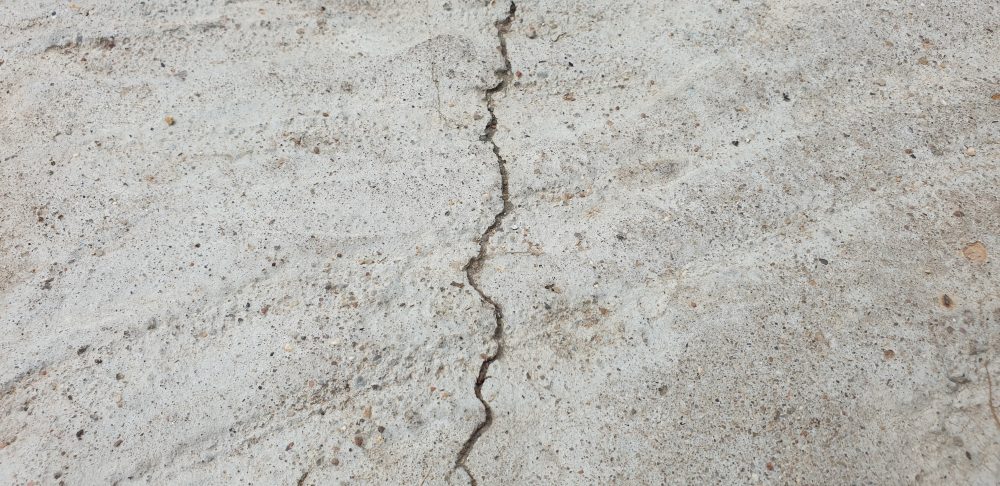
Understanding Which Foundation Cracks Matter Most
The appearance, size, location, and behavior of a crack tell a much bigger story than the crack itself.
What Types of Foundation Cracks Are Usually Normal?
The good news is that many foundation cracks are cosmetic.
Hairline or narrow vertical cracks often occur because concrete naturally shrinks as it cures. Small settlement over time can also create minor cracks that do not affect the structural integrity of the home.
According to the American Concrete Institute (ACI), visible cracking is a normal characteristic of reinforced concrete, and shrinkage and other time-dependent effects commonly contribute to crack development.
These cracks typically:
- Are very thin (often less than 1/8 inch)
- Run vertically
- Remain the same size over time
- Show no signs of displacement
- Do not allow water inside the home
While they should still be monitored, they often do not require structural repairs.
Which Foundation Cracks Are Warning Signs?
Some cracks deserve immediate attention because they may indicate ongoing foundation movement.
Contact a foundation professional if you notice:
- Horizontal cracks
- Stair-step cracks in brick or block walls
- Diagonal cracks that continue to widen
- Cracks wider than about 1/4 inch
- Water entering through foundation cracks
- One side of the crack sitting higher than the other
These cracks can signal foundation settlement, soil movement, hydrostatic pressure, or structural stress that should be professionally evaluated.
Why Do Foundation Cracks Happen?
Concrete cracks for many different reasons, and not all of them are structural.
Common causes include:
- Natural concrete shrinkage during curing
- Normal settling after construction
- Seasonal expansion and contraction of soil
- Poor drainage around the home
- Tree roots affecting soil moisture
- Plumbing leaks beneath the slab
- Soil erosion
- Foundation settlement
The American Concrete Institute notes that cracking can result from shrinkage, settlement, thermal changes, weathering, reinforcement corrosion, construction practices, or external loads. Some cracks affect appearance only, while others point to larger structural concerns.
The cause determines whether repair is necessary.
Can You Tell If a Crack Is Getting Worse?
Yes. Monitoring a crack over time is one of the best ways to determine whether it’s active.
Watch for:
- Increasing width
- Increasing length
- New cracks appearing nearby
- Doors or windows becoming harder to operate
- New drywall cracks inside the home
- Uneven floors developing
Taking dated photos every few months or marking the ends of a crack with pencil can help track changes.
If the crack continues to grow, schedule a professional inspection.
Do Small Cracks Ever Become Serious?
Sometimes they do.
A small crack isn’t necessarily dangerous today, but if the underlying cause continues, it can become much larger.
This is why early evaluations are valuable.
The Texas Section of the American Society of Civil Engineers explains that while the majority of concrete cracks do not compromise structural integrity, their physical characteristics should always be evaluated to determine whether structural performance has been affected.
Rather than guessing based on appearance alone, professionals evaluate:
- Crack width
- Crack pattern
- Location
- Foundation elevation
- Soil conditions
- Evidence of continued movement
Should You Repair Cosmetic Foundation Cracks?
It depends on the purpose.
Cosmetic cracks that are not caused by structural movement may simply be sealed to prevent moisture intrusion or improve appearance.
Structural cracks, however, require addressing the underlying cause before repairing the visible damage.
Simply filling a moving crack without correcting foundation movement often results in the crack reopening later.
Professional inspections help determine whether sealing, monitoring, drainage improvements, or structural foundation repair is the best long-term solution.
Frequently Asked Questions
Are hairline foundation cracks normal?
Yes. Hairline cracks are often caused by normal concrete shrinkage during curing or minor settlement and are generally not considered structural problems.
What size foundation crack should I worry about?
Cracks that are wider than approximately 1/4 inch, continue growing, or are accompanied by other signs of foundation movement should be professionally evaluated.
Is a horizontal foundation crack more serious than a vertical crack?
In many cases, yes. Horizontal cracks can indicate significant pressure against the foundation wall and should be inspected promptly.
Can I just seal a foundation crack myself?
Small cosmetic cracks can often be sealed to reduce moisture intrusion. However, if the crack is caused by structural movement, sealing alone will not solve the underlying problem.
Protect Your Home with an Expert Foundation Inspection
Not every foundation crack means your home is in danger, but every crack deserves the right diagnosis. Knowing the difference between normal concrete movement and signs of structural damage can save you unnecessary stress and help you avoid more expensive repairs later.
If you’ve noticed foundation cracks or other warning signs around your home, Steady House Foundation Repair is ready to help. Our experienced team provides honest inspections, clear recommendations, and reliable repair solutions designed to protect your home’s long-term stability.
Wondering if your foundation cracks are something to worry about? Contact us today to schedule a professional foundation evaluation.