
How Can Fall Rainfall Reveal Hidden Foundation Drainage Problems in North Texas Homes?
Fall rainfall can reveal hidden foundation drainage problems in North Texas homes by exposing areas where water collects, soil washes away, or moisture accumulates near the foundation. Warning signs include standing water, overflowing gutters, erosion, and new or widening cracks. Identifying these issues early can help homeowners address drainage concerns before they contribute to foundation movement.
North Texas homeowners know that the weather can change quickly, especially when dry summer conditions give way to fall rainstorms. These seasonal changes can place additional stress on residential foundations, particularly in areas with expansive clay soils. At Steady House Foundation Repair, we understand how changing soil moisture and drainage conditions can affect the stability of a home. Our goal is to help homeowners recognize potential foundation problems, understand their options, and make informed decisions about protecting their property. Whether you have noticed standing water near your home or are concerned about new cracks appearing after a storm, understanding the relationship between rainfall and foundation movement is an important first step.
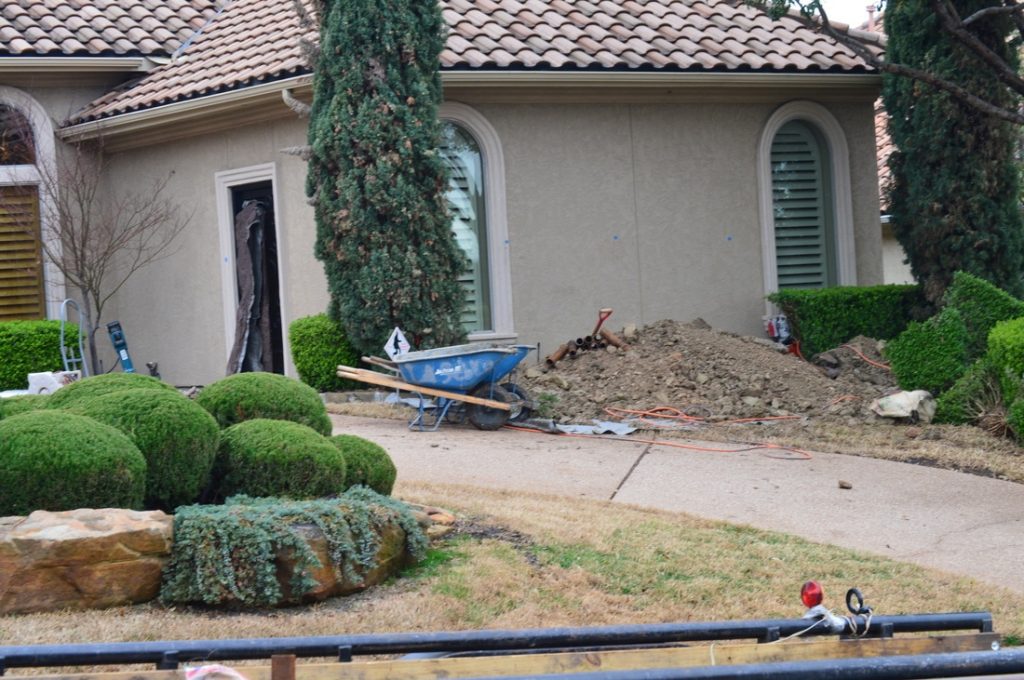
Why Fall Rainfall Can Expose Foundation Drainage Issues in North Texas
How Does Fall Rain Affect the Soil Beneath Your Foundation?
Fall rainfall can cause expansive clay soil to absorb moisture and swell, potentially placing pressure on the foundation above it. This becomes especially important after a hot, dry North Texas summer.
According to the U.S. Geological Survey, expansive soils can undergo significant volume changes as their moisture content fluctuates. These changes can contribute to foundation movement and structural damage.
During extended dry periods, clay soils lose moisture and shrink. When substantial rainfall returns, the soil begins absorbing water and expanding again.
The amount of movement depends on several factors, including soil composition, drainage conditions, foundation design, and moisture distribution.
Uneven moisture is particularly concerning. If one side of a home receives significantly more water than another, the supporting soil may expand at different rates, potentially contributing to differential foundation movement.
For homeowners throughout the Dallas-Fort Worth area, understanding this seasonal cycle can help explain why certain foundation symptoms become more noticeable after heavy rainfall.
What Are the Warning Signs of Poor Foundation Drainage After Heavy Rain?
Poor foundation drainage often becomes easier to identify during or immediately after a rainstorm. Water that cannot move away from the house may collect near the foundation and increase soil moisture.
Homeowners should watch for several warning signs:
- Standing water near the foundation: Puddles that remain long after rainfall may indicate improper grading or inadequate drainage.
- Overflowing gutters: Clogged gutters can send concentrated amounts of water directly beside the foundation.
- Soil erosion: Washed-out soil around the perimeter may indicate that runoff is not being properly controlled.
- Water entering crawl spaces: Excess moisture beneath pier and beam homes can create conditions that contribute to deterioration.
- New or widening cracks: Changes in brickwork, drywall, or foundation surfaces may indicate movement that deserves further evaluation.
- Doors and windows that suddenly stick: Changes in alignment can sometimes accompany foundation movement.
Not every symptom indicates serious foundation damage. However, several symptoms appearing together, especially after significant rainfall, may warrant a professional evaluation.
Can Poor Drainage Cause Permanent Foundation Damage?
Yes, prolonged or repeated drainage problems can contribute to foundation damage when moisture changes cause the supporting soil to move unevenly.
The problem is not necessarily a single heavy rainstorm. Instead, repeated cycles of wetting and drying can gradually affect the soil supporting the home.
For example, a downspout that consistently empties beside one corner of a house may create a localized area of unusually wet soil. Over time, this moisture imbalance can contribute to differential movement.
Poor drainage can also contribute to soil erosion, leaving some foundation areas with reduced support.
The Environmental Protection Agency recommends directing water away from building foundations as part of effective moisture management. Managing runoff helps reduce unwanted moisture accumulation around the structure.
If drainage problems have already contributed to foundation movement, correcting the drainage alone may not reverse existing structural changes. A professional evaluation can help determine whether additional foundation repair is necessary.
What Should North Texas Homeowners Check After Fall Rainstorms?
A simple exterior inspection after a rainstorm can help homeowners identify drainage concerns before they become more difficult to manage.
Start by walking around the outside of your home once conditions are safe.
Pay attention to the following areas:
- Gutters and downspouts: Confirm that water flows freely and discharges away from the foundation.
- Yard grading: Look for low spots or areas where the ground slopes toward the house.
- Foundation perimeter: Check for standing water, exposed soil, or visible erosion.
- Exterior walls: Look for newly developed cracks or changes in existing ones.
- Interior rooms: Notice any recent changes in flooring, wall cracks, or door alignment.
Taking photographs can be particularly helpful. Comparing images after different storms may reveal patterns that are not immediately obvious.
Avoid attempting major grading changes or foundation repairs without understanding the cause of the problem. Improper drainage modifications can sometimes redirect water toward another vulnerable area.
When Should You Schedule a Professional Foundation Inspection?
A professional foundation evaluation is worth considering when drainage problems are accompanied by signs of structural movement.
Examples include recurring standing water near the foundation, widening cracks, uneven floors, or doors that have become increasingly difficult to open and close.
An evaluation can help distinguish between surface drainage concerns, cosmetic changes, and potential foundation settlement.
A foundation repair professional may examine visible damage, measure floor elevations, and assess whether the observed conditions suggest movement.
Depending on the findings, recommendations may include monitoring, drainage corrections, additional investigation, or foundation repair.
Addressing the underlying cause is important because repairing visible cracks without resolving ongoing moisture problems may not prevent additional movement.
Frequently Asked Questions About Fall Rain and Foundation Problems
Can one heavy rainstorm damage my foundation?
A single storm can expose existing drainage weaknesses and contribute to soil movement, but foundation damage typically depends on several factors, including soil conditions, drainage, and the structure’s existing condition.
How long should water remain near my foundation after rain?
There is no universal safe time limit. Water that repeatedly pools against the foundation or drains slowly should be investigated, particularly if erosion or structural symptoms are also present.
Should I water my foundation during the fall?
Foundation watering needs depend on rainfall, soil conditions, and local recommendations. Avoid overwatering, and focus on maintaining reasonably consistent moisture conditions rather than allowing extreme wet and dry cycles.
Can foundation drainage problems be fixed without foundation repair?
Yes. If the foundation has not experienced significant structural movement, improving drainage may be sufficient. An evaluation can help determine whether foundation stabilization or other repairs are necessary.
Protect Your North Texas Home Before Drainage Problems Get Worse
Fall rainfall offers an opportunity to identify drainage problems that may have gone unnoticed during the dry summer months. Paying attention to runoff patterns, soil conditions, and changes around your home can help you make informed maintenance decisions.
Concerned that fall rainfall has revealed a foundation problem? Steady House Foundation Repair can help you explore the next steps toward protecting your home’s stability.
Contact Steady House Foundation Repair to request a foundation evaluation.