
What Should I Do If New Cracks Appear in My Home?
If you notice new cracks in your walls, ceilings, brick, or foundation, document them, check for other signs of movement, and monitor whether they widen or spread. A new crack does not automatically mean your home needs foundation repair, but cracks that grow, appear with sticking doors or uneven floors, allow water intrusion, or develop suddenly should be professionally evaluated.
Steady House Foundation Repair helps homeowners understand what is happening beneath their homes instead of simply guessing based on a visible crack. Serving homeowners throughout the Dallas-Fort Worth area, Steady House specializes in slab and pier and beam foundation repair, foundation leveling, and drainage correction. The company emphasizes careful diagnosis because cracks visible inside or outside a home can have several possible causes, and determining the severity of foundation movement often requires professional evaluation. Steady House’s approach includes listening to homeowners, explaining the process step by step, and developing solutions based on the conditions affecting the individual home.
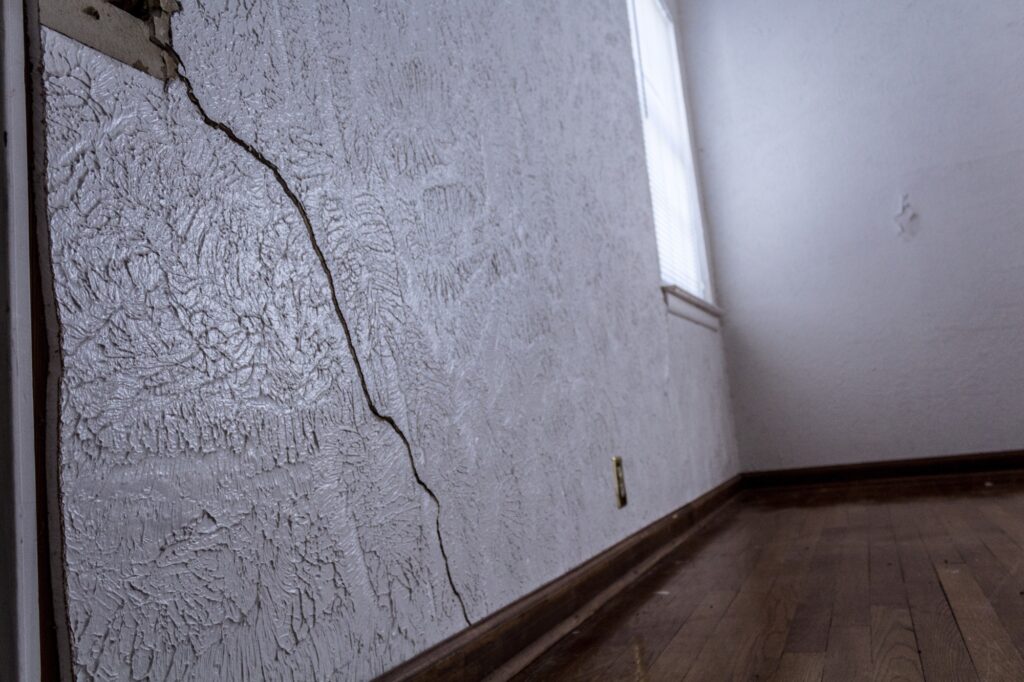
How to Tell If New House Cracks Could Be a Foundation Problem
New cracks deserve attention, but the most useful information comes from looking at the crack’s pattern, whether it changes, and what else is happening around the home.
According to This Old House, cracks that remain unchanged for years are generally less concerning than cracks that continue to widen or spread. The publication also notes that foundation problems may present alongside sticking doors and windows, sloping floors, visible gaps, or water intrusion.
What Should You Do First When You Find a New Crack?
Start by documenting the crack rather than immediately covering, patching, or painting over it. Photos and measurements can help you determine whether the condition is stable or changing.
Take these steps:
- Photograph the crack. Take a clear photo that shows its location and surrounding area.
- Record the date. Knowing when you first noticed the crack provides a useful reference point.
- Check its length and width. Note whether it is hairline-thin, widening, or extending across a larger area.
- Look around the house. Check nearby doors, windows, floors, ceilings, trim, exterior brick, and the visible foundation.
- Monitor for change. Compare future photos to determine whether the crack is growing.
This Old House specifically recommends marking the ends of a crack with a pencil and dating those marks, or using photographs to track changes over time.
Avoid assuming that patching the visible crack solves the underlying problem. If foundation movement caused the crack, repairing only the cosmetic damage may hide a symptom without addressing its source.
Which Types of Cracks Should Homeowners Take Seriously?
Cracks are more concerning when they are actively changing or appear alongside other symptoms of structural movement.
Horizontal cracks can be particularly important to evaluate because they may indicate pressure against a foundation wall. Diagonal cracks can sometimes accompany uneven settlement, while vertical hairline cracks may have less serious causes. Crack direction alone, however, cannot diagnose a foundation problem.
Pay closer attention when you notice:
- A crack that is getting longer or wider
- Several new cracks appearing within a short period
- Stair-step cracking along exterior brick or masonry
- Horizontal foundation or wall cracks
- Separation between walls, ceilings, trim, or the foundation
- Water entering through a crack
- Visible bowing or displacement
- Cracks appearing alongside other changes in the home
The important question is not simply, “Is there a crack?” It is whether the crack represents an isolated cosmetic change or part of a broader pattern of movement.
What Other Signs Can Point to Foundation Movement?
New cracks become more significant when other parts of the house are changing at the same time.
Steady House Foundation Repair identifies several potential signs of foundation trouble for both slab and pier and beam homes. These include sticking doors or windows, uneven or sloping floors, cracks in walls or ceilings, visible separation between walls and the foundation, and sagging floors.
Walk through your home and check for:
- Doors that recently started sticking or will not latch
- Windows that have become difficult to open
- Floors that feel uneven, sloped, or sagging
- New gaps around doors, windows, walls, or trim
- Exterior brick or masonry separation
- Changes where walls meet ceilings
- Water or persistent moisture near the foundation
One symptom by itself may not establish the cause. Multiple new symptoms occurring together provide more reason to schedule an evaluation.
Why Can Soil and Drainage Cause Foundation Cracks?
Changes in the soil around a home can contribute to foundation movement, especially when moisture conditions fluctuate.
This Old House identifies water, poor drainage, soil movement, and settlement among common contributors to foundation damage. Soil can expand when wet and contract when dry, while excessive water around a foundation can increase pressure and contribute to movement or cracking.
This is particularly relevant to Steady House’s approach because the company does more than repair foundations. It also provides drainage correction and notes that foundation issues frequently revolve around how the property’s drainage system is functioning. Addressing the source of the problem can be an important part of creating a longer-term solution.
Homeowners who notice new cracks should therefore inspect what is happening outside, too. Look for poor grading, standing water, drainage problems, or other conditions that may be concentrating moisture around the foundation.
When Should You Call a Foundation Repair Professional?
Schedule a professional foundation evaluation when a crack is new and changing, when multiple warning signs appear together, or when you cannot confidently determine what is causing the problem.
This does not mean every crack requires foundation repair. In fact, an evaluation can help distinguish between cosmetic cracking, normal changes, drainage-related concerns, and evidence of more significant foundation movement.
A professional can evaluate the home as a system rather than judging one crack in isolation. Steady House works with both slab and pier and beam foundations and conducts inspections designed to identify the source of foundation-related problems before recommending an appropriate solution.
Prompt evaluation can also help homeowners avoid waiting until an issue becomes more obvious. Steady House emphasizes early detection as part of its foundation and drainage services, since unresolved problems can become more extensive over time.
Frequently Asked Questions About New Cracks in a Home
Does every new crack mean I have foundation damage?
No. A new crack does not automatically mean the foundation is failing. Crack location, direction, progression, moisture, and accompanying symptoms should all be considered before determining the cause.
Should I patch a foundation crack as soon as I see it?
Document the crack before covering it so you can track whether it changes. If the crack is widening, leaking, or accompanied by other signs of movement, consider having the underlying cause evaluated before relying on a cosmetic repair.
Are sticking doors and wall cracks signs of foundation problems?
They can be. Steady House lists sticking doors or windows, wall and ceiling cracks, uneven floors, and visible separation among potential indicators of slab or pier and beam foundation problems.
How do I know if a foundation crack is getting worse?
Take dated photographs, note its dimensions, and periodically compare its length and width. A crack that continues to widen or spread is more concerning than one that remains stable over a long period.
Do Not Ignore a New Crack, Find Out What Is Causing It
Finding a new crack in your home can be unsettling, but the next step should be investigation rather than assumption. Document the crack, look for related warning signs, pay attention to drainage conditions, and monitor whether anything changes.
If you are seeing new cracks, uneven floors, sticking doors, or other possible signs of foundation movement, Steady House Foundation Repair can evaluate your home and help determine the appropriate next steps.
Concerned about new cracks in your home? Contact Steady House Foundation Repair to schedule a foundation repair estimate.