
Can Poor Yard Grading Cause Foundation Settlement in Dallas-Fort Worth Homes?
Yes, poor yard grading can contribute to foundation settlement in Dallas-Fort Worth homes by allowing water to collect near the foundation instead of draining away. Excess moisture can cause expansive clay soil to swell, while erosion and uneven soil conditions can weaken foundation support. Over time, these changes may contribute to uneven settlement, structural movement, and foundation damage.
Many North Texas homeowners focus on cracks, sticking doors, or uneven floors when evaluating foundation problems, but the cause may begin outside the home. Yard grading plays an important role in controlling how rainwater moves across a property and how much moisture reaches the soil supporting the foundation. In the Dallas-Fort Worth area, where expansive clay soils and changing weather conditions can affect residential structures, improper drainage deserves special attention.
At Steady House Foundation Repair, we understand the importance of identifying the conditions contributing to foundation movement rather than focusing only on visible damage. Our goal is to help homeowners recognize potential problems, understand available repair options, and make informed decisions about protecting their property. Knowing how yard grading affects foundation stability is an important first step toward preventing unnecessary damage.
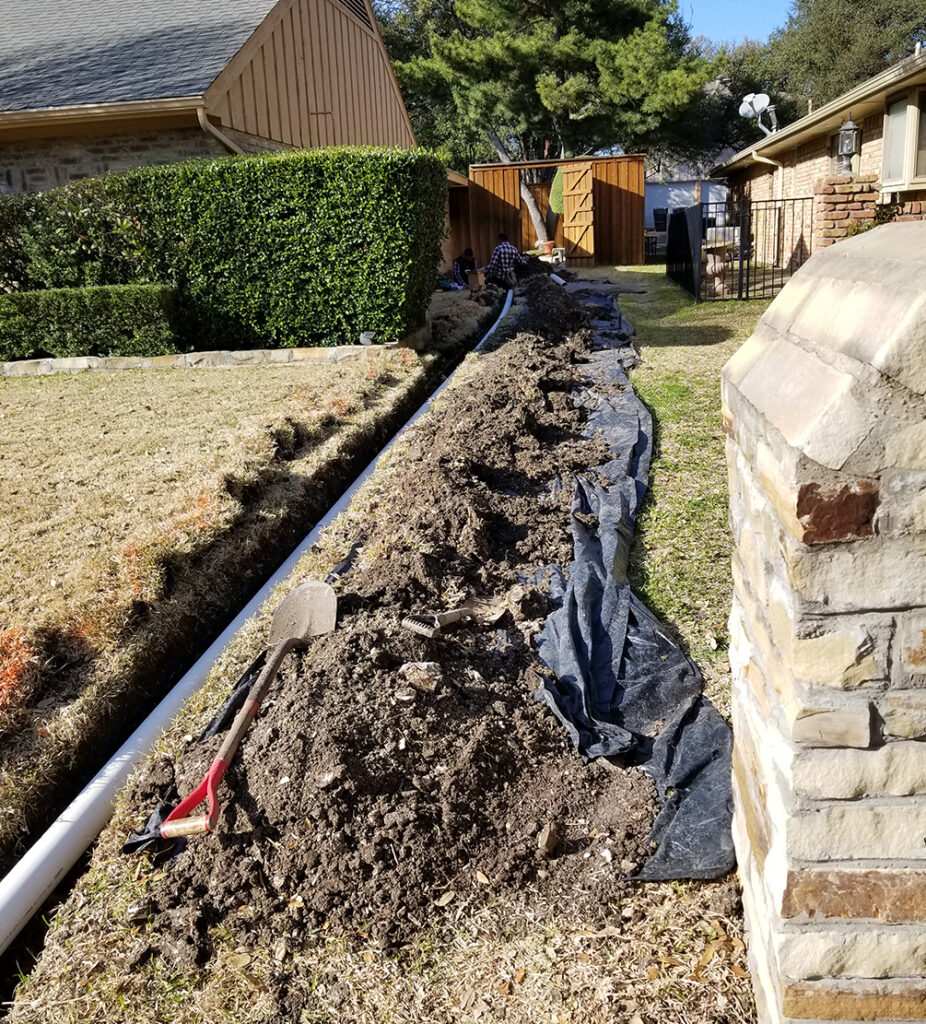
How Improper Yard Drainage Affects Foundation Stability in North Texas
How Does Poor Yard Grading Lead to Foundation Settlement?
Poor yard grading can contribute to foundation settlement by directing excess water toward the home and creating uneven moisture conditions in the supporting soil.
Ideally, the ground surrounding a home should slope away from the foundation so rainfall can drain safely toward appropriate discharge areas. When the ground slopes toward the house or contains low spots, water may accumulate around the foundation perimeter.
This can create several problems:
- Soil expansion: Expansive clay absorbs moisture and swells, potentially lifting portions of the foundation.
- Soil shrinkage: During dry periods, clay loses moisture and contracts, sometimes reducing support beneath the structure.
- Soil erosion: Concentrated runoff can wash away supporting soil around certain foundation areas.
- Uneven moisture distribution: Some sections of the foundation may experience greater soil movement than others.
According to the U.S. Geological Survey, expansive soils change volume as their moisture content fluctuates. These changes can exert pressure on structures and contribute to foundation damage.
In North Texas, alternating periods of drought and heavy rainfall can make moisture management particularly important.
What Are the Warning Signs of Improper Yard Grading?
The most noticeable warning sign of improper yard grading is water collecting near the foundation after rainfall.
However, several additional conditions may indicate that the yard is not draining properly.
Homeowners should watch for:
- Standing water near exterior walls: Puddles that repeatedly form beside the house may indicate low areas or an improper slope.
- Soil washing away: Visible erosion around the foundation can suggest concentrated runoff.
- Water entering crawl spaces: Moisture beneath pier and beam homes may indicate drainage problems around the structure.
- Persistent damp soil: Areas that remain unusually wet compared with the surrounding yard may have inadequate drainage.
- Cracks in exterior masonry: New or widening cracks may indicate movement that deserves further investigation.
- Doors or windows becoming difficult to operate: Changes in alignment can sometimes accompany foundation movement.
Not every drainage issue results in foundation damage, and not every crack is caused by poor grading.
However, when drainage concerns and structural symptoms appear together, a professional foundation evaluation may help determine whether they are connected.
How Much Slope Should Your Yard Have Away From the Foundation?
A common residential drainage recommendation is for the ground to fall approximately six inches within the first ten feet away from the foundation, where site conditions allow.
This corresponds to a slope of roughly five percent.
The International Residential Code includes grading provisions that generally call for a minimum five-percent slope away from foundations for the first ten feet, subject to applicable exceptions and local requirements.
This guidance helps prevent surface water from collecting against exterior foundation walls.
However, not every property has enough space to achieve that slope. Homes with narrow side yards, nearby structures, or unusual terrain may require alternative drainage solutions.
Other considerations include:
- Keeping soil and landscaping materials below appropriate exterior wall clearances.
- Ensuring downspouts discharge away from the foundation.
- Preventing patios, sidewalks, and driveways from directing water toward the home.
- Avoiding drainage changes that redirect runoff onto neighboring properties.
Homeowners should consult applicable local requirements before making major grading modifications.
Can Fixing Yard Grading Prevent the Need for Foundation Repair?
Correcting poor yard grading can help reduce future moisture-related foundation problems, but it cannot necessarily reverse settlement or structural movement that has already occurred.
If drainage problems are identified before significant foundation movement develops, improving runoff management may help maintain more consistent soil conditions.
Potential drainage improvements include:
- Regrading portions of the yard to direct water away from the house.
- Extending downspouts to suitable discharge locations.
- Correcting low spots where water collects.
- Installing appropriate surface drainage systems when necessary.
- Maintaining gutters to prevent overflow near the foundation.
The Environmental Protection Agency emphasizes the importance of controlling moisture around buildings, including directing rainwater away from foundations.
However, drainage improvements should address the actual source of the problem.
For example, installing a drainage system may not solve foundation movement caused by deteriorating support components or unrelated structural conditions.
If significant settlement has already occurred, foundation repair may still be necessary to address the affected areas.
When Should You Call a Foundation Repair Professional?
A foundation repair professional should evaluate your home when drainage concerns are accompanied by signs of ongoing or significant structural movement.
Common reasons to schedule an evaluation include widening cracks, noticeable floor slopes, recurring gaps around doors and windows, or visible separation between structural materials.
An evaluation may involve examining the foundation, reviewing visible symptoms, and measuring floor elevations to identify areas of concern.
The contractor can then help determine whether the observed conditions suggest settlement, soil-related movement, or another issue requiring further investigation.
For Dallas-Fort Worth homeowners, it is especially important to consider how local clay soils and seasonal moisture changes may affect the foundation.
Steady House Foundation Repair helps homeowners understand foundation concerns and evaluate appropriate repair options for their property’s needs.
Addressing structural symptoms without considering drainage conditions may leave contributing moisture problems unresolved.
Frequently Asked Questions About Yard Grading and Foundation Settlement
Can standing water around my house cause foundation damage?
Yes. Repeated standing water can contribute to uneven soil moisture, erosion, and foundation movement. The risk depends on soil conditions, drainage patterns, and the foundation’s existing condition.
Can I fix poor yard grading myself?
Minor landscaping adjustments may be manageable for homeowners, but significant grading changes should be carefully planned. Improper modifications can create additional drainage problems or affect neighboring properties.
Does every foundation settlement problem come from poor drainage?
No. Foundation settlement can result from several factors, including soil consolidation, construction conditions, plumbing leaks, and changes in soil moisture. A professional evaluation can help identify likely contributing causes.
Should I repair my foundation before fixing yard drainage?
The appropriate sequence depends on the condition of the foundation and the severity of the drainage problem. In many cases, drainage corrections should be coordinated with structural repairs to reduce the likelihood of recurring moisture-related movement.
Protect Your Dallas-Fort Worth Home From Foundation Settlement
Poor yard grading may seem like a minor landscaping concern, but improper drainage can contribute to soil movement and foundation instability over time. Understanding how water moves around your property can help you recognize problems before they become more difficult to address.
Concerned that poor drainage is affecting your foundation?
Steady House Foundation Repair can help you evaluate potential foundation problems and understand your repair options.
Contact Steady House Foundation Repair today to schedule a foundation evaluation and take the next step toward protecting your home.